Roberto Fonseca
Jazz

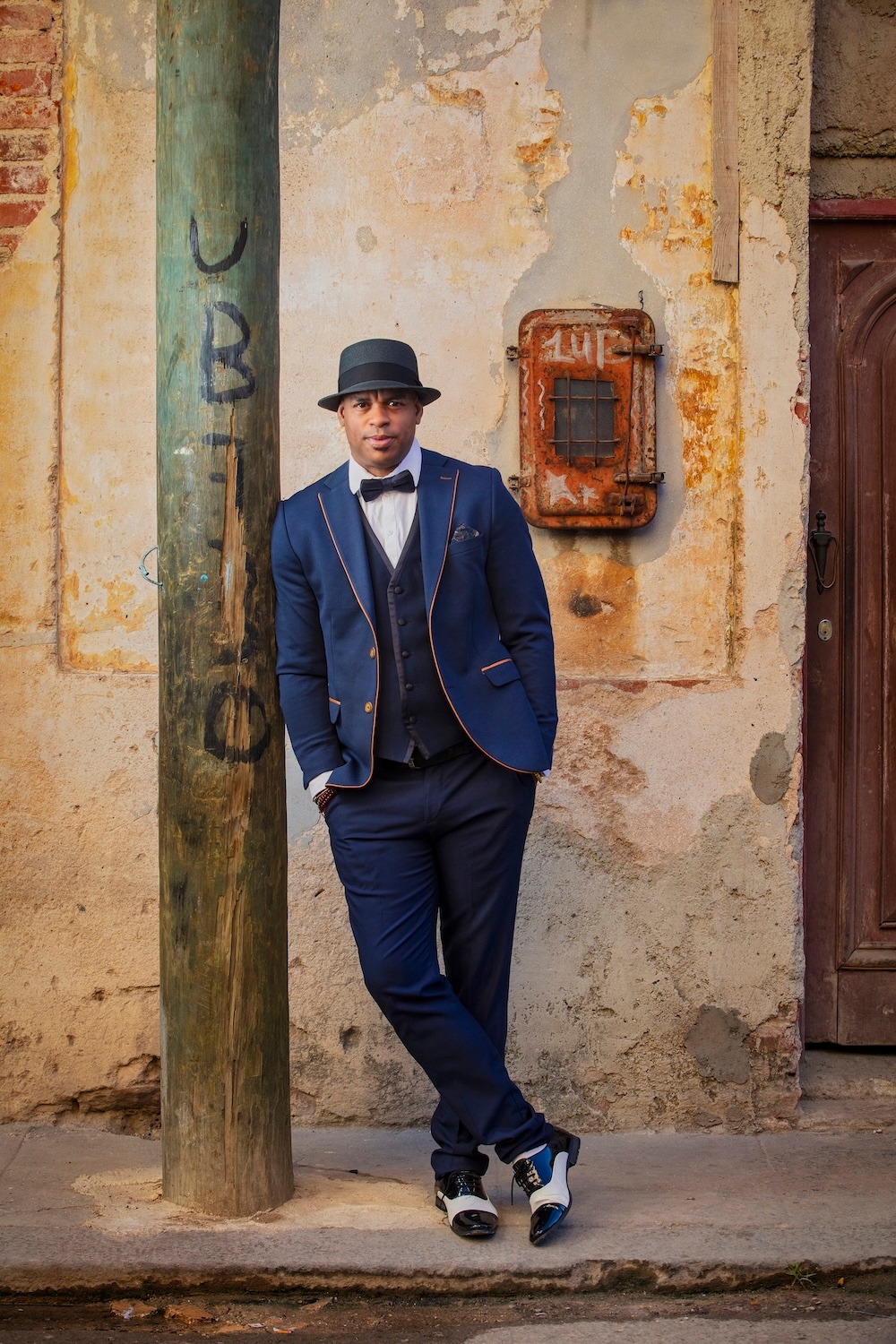
Roberto Fonseca is one of those rare individuals whose life seems to have been destined: born in the right era, the right place, and the right family. Pianist, performer, multi-instrumentalist, composer, and producer, he was born in 1975 in Havana into a family of Cuban artists. His mother, Mercedes Cortes Alfaro, was a dancer at the legendary Tropicana Club and renowned throughout Cuba for her Bolero singing. His father, Roberto Fonseca Sr., was a drummer.
And yet, the mystery remains. While innate talent clearly plays a role in his career, the touch of a pianist depends on more than just hand shape—his genius has been shaped by those who crossed his path and inspired him along the way.
Fonseca made his first major appearance at the age of 15 at the Havana Jazz Festival—an event he would go on to direct as its first artistic director 26 years later, succeeding the great Chucho Valdés. From early on, Roberto was already opening doors to a more global Cuban music scene, all while remaining deeply rooted in his heritage. He pursued a Master’s in composition at the prestigious Instituto Superior de Arte. After a tour in Italy, he recorded his first solo album Tiene que ver, and in 2001 joined the legendary Buena Vista Social Club, becoming its young, mischievous virtuoso. That experience launched him into a whirlwind international career, performing alongside icons like Ibrahim Ferrer and the timeless diva Omara Portuondo.
Trying to retrace Roberto’s path is like trying to dissect his music or explain the magic of his improvisations. He is, in many ways, a reflection of his compositions: to explore them is to lose oneself in an endless, cohesive journey where every project has its place and meaning. His numerous collaborations speak for themselves:
In the UK, with influential DJ Gilles Peterson, on an album blending reggaeton, hip-hop, and Afro-jazz; with American producer and DJ Joe Claussell, igniting the stage at La Cigale in Paris; in Africa, with Baba Sissoko and especially Fatoumata Diawara, a key musical partnership, resulting in their live album At Home (2015), recorded at Jazz in Marciac; his album No Limit, an Afro-Cuban jazz project recorded in Japan, followed immediately by Elengó, a fusion of Afro-Cuban rhythms, hip-hop, and drum’n’bass.
Then came Yo, nominated for a Grammy Award in 2012—a high-energy album uniting fifteen musicians from Cuba, Africa, and the U.S. The same year saw 7 Rayos, a fusion of Cuban sounds, classical music, West African instruments, electronic music, and poetic slam.
ABUC followed: a retrospective album where the past brilliantly includes the future, boldly reinterpreting Cuban musical heritage in a contemporary and innovative way. In 2019, he collaborated with Ibrahim Maalouf and rising Cuban rap star Danay Suárez on the album Yesun.
At just 45, Fonseca has released no fewer than 9 solo albums, over 20 collaborative albums, earned a Grammy nomination, and was awarded the title of Chevalier de l’Ordre des Arts et des Lettres in 2019.
This year, at the height of his career, Roberto Fonseca unveils La Gran Diversión—a tribute to the golden age of Cuban music, the wild dance nights of Havana, and to the legendary Parisian cabaret of the 1930s, La Cabane Cubaine. The album and accompanying live show offer a truly unique experience: Fonseca’s bold creativity backed by an orchestra worthy of the Buena Vista era. It’s a subtle blend of the traditions passed down from the greats, his unmatched talent, and a wildly modern flair.
Whether or not you know the steps to a mambo, rumba, or bolero, resisting the urge to move to the rhythms of this artist—now widely regarded as the face of Cuban music’s new wave—may be impossible.
© Anteprima 2026. All rights reserved
729d28b2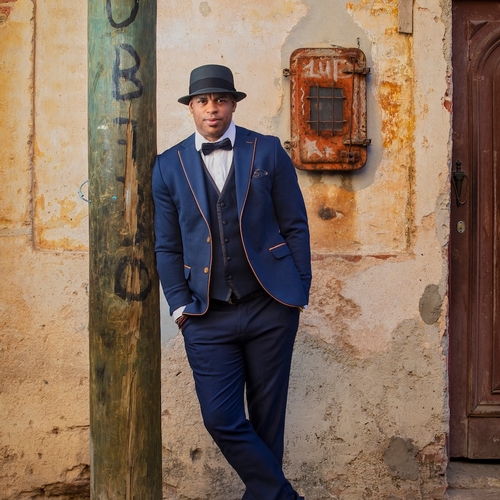
_1800x1800p.jpg)